
Why crack sealing comes first
Asphalt rarely fails from the top down. It fails because water gets underneath. Once the gravel base is wet, it softens and loses its strength. Traffic then flexes the pavement until cracks spread into the spider-web pattern that means the base has failed.
Sealing cracks while they are still individual lines keeps the base dry and the lot in the cheap part of its life. It also has to happen before sealcoating, because sealcoat alone cannot hold water out of an open crack.
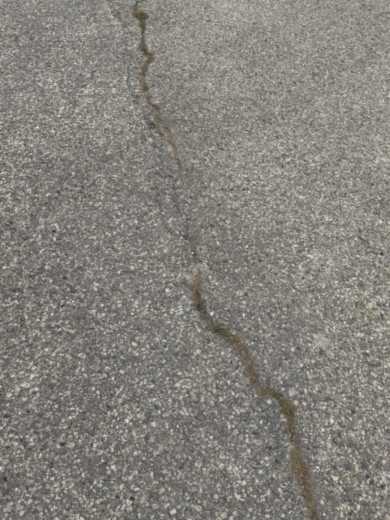
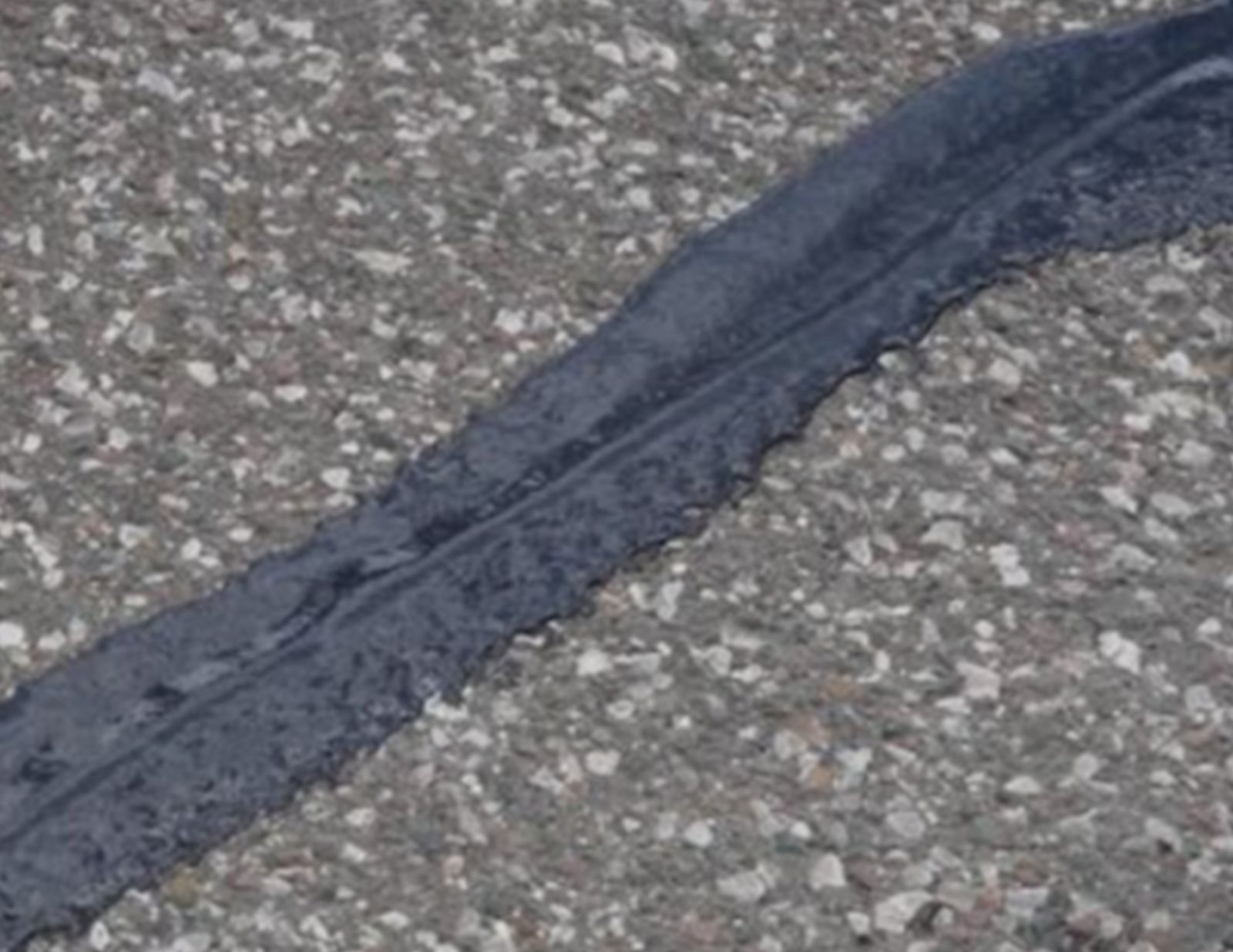
What one crack can turn into
Crack figures: Pavement Preservation & Recycling Alliance (roadresource.org). Results vary with traffic, drainage and pavement condition.
How we seal cracks
- 1Map the cracksSeparate working cracks, minor cracks and failed areas that need patching instead.
- 2Rout where neededWide, moving cracks are routed to a clean reservoir so the sealant has room to stretch.
- 3Clean and dryCracks are blown out with compressed air and dried so the sealant bonds to sound asphalt.
- 4Hot-pour sealRubberized sealant is applied hot and struck off, ready for traffic once it cools.
Commercial lots, roads and pathways
Retail, condo, industrial and institutional lots of any size.
Private roads, access lanes and municipal streets, with traffic control planned around the work.
Paved multi-use paths for municipalities and summer villages.
Industrial yards, loading areas and shop aprons that take heavy loads.
When to crack seal
Hot-pour sealant can go down whenever cracks are clean and dry and the pavement is above about 4°C. In Central Alberta that means spring through late fall. Late summer and early fall are ideal, because cracks are partly open and the lot goes into freeze-up sealed.
Most commercial lots benefit from crack sealing every one to two years, and always in the season before a sealcoat.
What affects the price
- Total length of cracks to be sealed
- Crack width, and whether routing is needed
- Amount of alligatored area that needs patching instead
- Traffic control, phasing and after-hours work
- Whether sealing is bundled with sealcoating or line painting
Crack sealing questions
How soon can traffic drive on sealed cracks?
Hot-pour sealant sets as it cools, so traffic can usually return shortly after application. We confirm on site before removing cones.
Is crack sealing the same as crack filling?
Not quite. Sealing uses flexible sealant, often in a routed reservoir, for cracks that open and close with the seasons. Filling is a simpler treatment for cracks that barely move. Most lots need some of both.
Will crack sealing fix alligator cracking?
No. Interconnected cracking means the base underneath has failed. Those areas need patching or milling and repaving, which we can quote at the same time.
Can you quote crack sealing from photos?
Yes. Send a few photos of the worst areas and the property address. We estimate crack length from photos and satellite imagery and confirm on arrival.
Seal it before winter
Send the property address and a few photos of the cracks. In Central Alberta we’ll walk the lot; further afield we quote remotely from your photos and satellite measurements.
Central Alberta · Calgary · Edmonton · BC Interior · Saskatchewan