
Hot-Pour vs Cold-Pour Crack Sealer: Which to Use and When
6 min read · Updated October 2026 · Stonehouse Equipment & Contracting
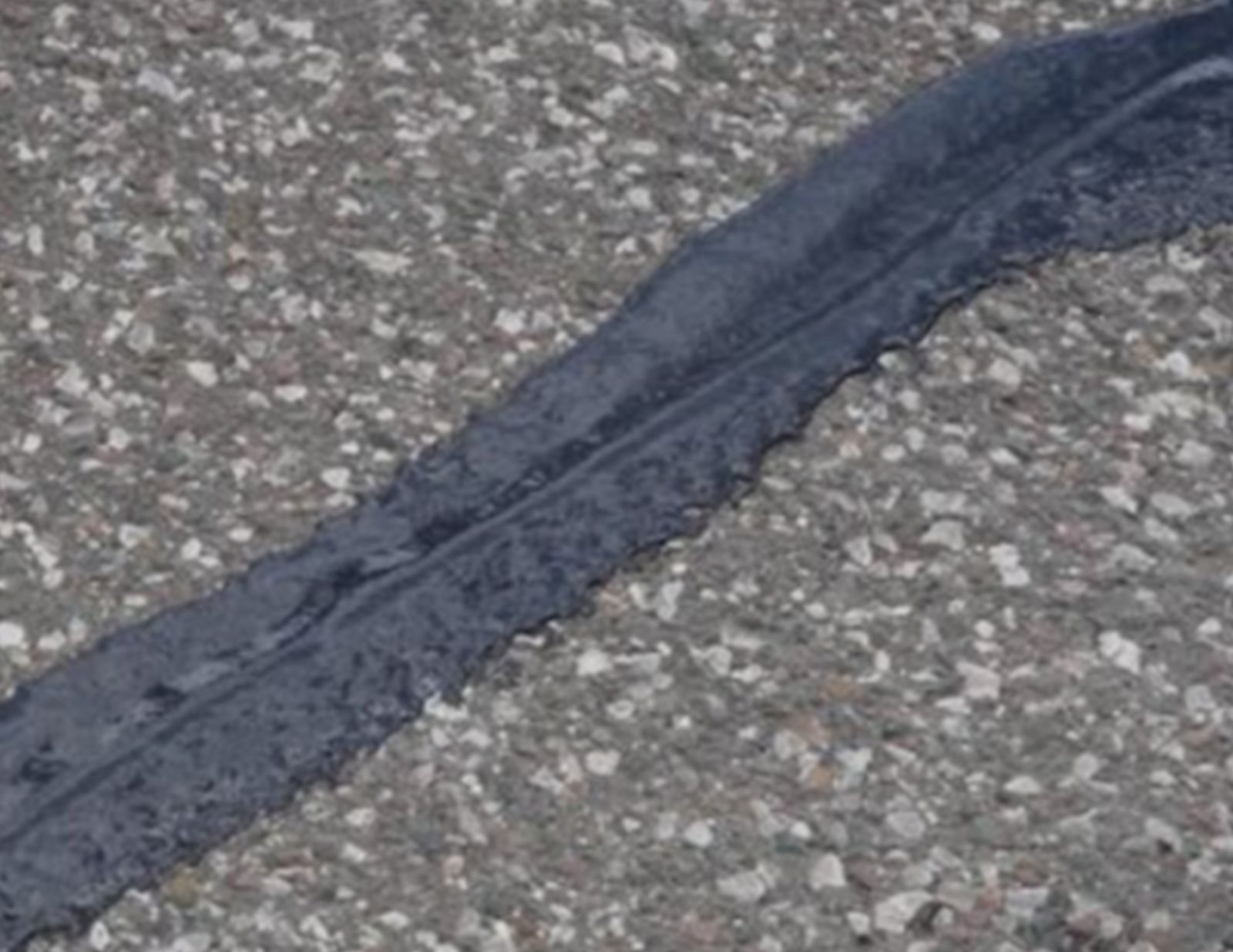
Hot-pour sealant is melted in a heated kettle and applied around 190–200°C. It stays flexible through Alberta winters and is the right choice for commercial lots and wider, moving cracks. Cold-pour filler comes ready to use from a pail. It suits small, stable cracks, touch-ups and small jobs, but it usually doesn’t last as long.
Why cracks need sealing at all
A crack is an open door for water. Once water reaches the gravel base under the asphalt, it softens it. In Alberta that water also freezes and expands every winter, which pries the crack wider. Left alone, a hairline crack becomes a pothole within a few seasons.
Sealing closes the door. Both hot-pour and cold-pour products do that. The difference is how well they keep doing it when the pavement moves.
Hot-pour crack sealant
Hot-pour sealant is a rubberized, polymer-modified asphalt product that arrives as solid blocks. It’s melted in an oil-jacketed kettle and applied hot through a wand or pour pot. A typical commercial product is poured at 370–390°F (about 188–199°C) and must not be overheated.
- Stays flexible in the cold. It stretches as cracks open in winter and recovers in summer.
- Bonds well when cracks are cleaned, blown out and dried with a hot-air lance first.
- Sets quickly as it cools, so traffic can usually return soon after.
- Needs equipment and crew: a melter, compressor, and often a router to open the crack to a clean reservoir.
Best for commercial parking lots, drive lanes, municipal roads and any crack that opens and closes with the seasons.
Cold-pour crack filler
Cold-pour products are asphalt emulsions, often rubberized, that come in pails or totes and go straight from the container into the crack. No melting is required.
- Easy to apply with minimal equipment.
- Good for fine, stable cracks that don’t move much.
- Cures as water evaporates, so it needs dry, mild weather and more time before traffic.
- Shorter service life than hot-pour on working cracks in a freeze-thaw climate.
Best for touch-ups between full programs, small residential jobs, and narrow cracks where a melter isn’t practical.
Side by side
| Hot-pour sealant | Cold-pour filler | |
|---|---|---|
| Form | Solid blocks, melted on site | Ready-to-use liquid |
| Application temp. | About 188–199°C (370–390°F) | Ambient |
| Pavement & air | Typically above 4°C, dry | Warm and dry; check product sheet |
| Crack type | Working cracks that move | Fine, stable cracks |
| Cold-weather flexibility | High | Lower |
| Back to traffic | Once cooled | After curing; often hours |
| Equipment | Melter, compressor, heat lance | Pails, squeegee, blower |
| Best for | Commercial programs | Touch-ups, small jobs |
What we use, and when
For commercial lots, Stonehouse uses hot-applied rubberized sealant as the standard. Cracks are cleaned and blown out, and the pavement is dried first so the sealant bonds. We use cold-pour for small touch-ups and narrow cracks where hot-pour isn’t practical.
The best time to seal is before cracks get wide, ideally late summer or early fall, so the lot goes into freeze-thaw season closed up.
Common questions
Can you seal cracks in the rain? No. Cracks have to be clean and dry for any sealant to bond.
Will crack sealing fix alligator cracking? No. Interconnected “alligator” cracks mean the base has failed. Those areas need patching or milling and repaving.
Should cracks be sealed before sealcoating? Yes. Sealcoat won’t hold water out of an open crack.
Send us a few photos of the cracks and we’ll tell you what we’d use and what it would cost.
Related guides
- Crack sealing vs crack filling: why the crack type matters
- How warm does it need to be? An Alberta temperature guide
- When can traffic drive on it?
Sources
- SealMaster, CrackMaster 1190 technical data sheet (pour temperature, application conditions)
- Roadly, “The practical difference between hot pour and cold pour crack sealer”
- FHWA-RD-99-147, crack treatment guidance, via the National Center for Pavement Preservation